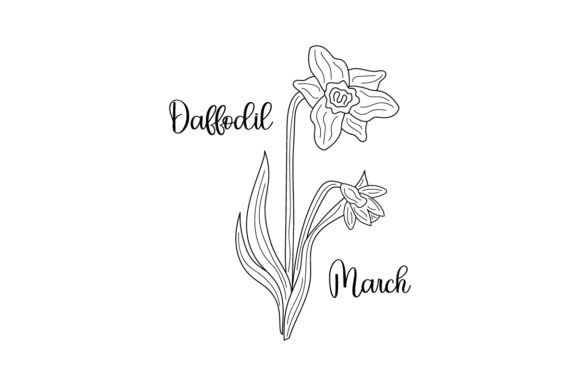
Birth Month Flowers: March Daffodil Embroidery
When a customer asks for something deeply personal—a gift that says I remember who you are and what you love—I immediately reach for a birth month flower design. I recently tested the Birth Month Flowers - March - Daffodil - Line Art - Embroidery with my own embroidery machine, and I’m ready to share exactly how it performs, what it adds to a finished product, and where you’ll want to pay extra attention.
First Impression: A Gentle, Spring-Light Line Art
Opening the digital embroidery file, I was struck by the clean, airy feel. This isn’t a heavy, dense floral that shouts—it’s a whisper of spring. The line art style gives the daffodil a hand-drawn, almost botanical illustration quality. The trumpet and petals flow with a relaxed, organic rhythm that feels more like a sketch from a vintage garden journal than a rigid machine embroidery design. For a personalized gift, that softness is everything. It makes the finished piece look intentional, thoughtful, and far more expensive than a generic off-the-shelf item.
The mood is elegant without being formal, sweet without being childish. Depending on your thread choice, you can steer it toward a modern, minimalist look on a linen pillow cover or a classic, romantic feel on a monogrammed wedding gift. I saw it immediately as a quiet statement piece—the kind of item that makes a customer pause in a craft fair booth and say, “That’s my flower.”
Where This Design Shines in a Personalized Gift Shop
This march birth flower embroidery is more versatile than you might expect. Because it’s a light line art, it doesn’t dominate the product; it complements it. Here are the applications I’ve mapped out for my own small shop, and each one passed my mental stitching test.
- Baby embroidery – A onesie or a soft muslin blanket with a single daffodil and the baby’s name underneath becomes a thoughtful newborn gift for a March baby. The line art is gentle on delicate skin and doesn’t stiffen the fabric too much.
- Wedding gifts – A set of linen napkins or a ring bearer pillow featuring the couple’s birth flowers. Pair this daffodil with a partner’s bloom for a highly custom, heirloom-quality keepsake.
- Family keepsakes – A decorative family tree wall hanging where each member’s birth month is represented by a tiny flower. The daffodil’s simple silhouette makes it legible even at a reduced size.
- Personalized towels – A single stem on the corner of a hand towel elevates a bathroom set instantly. I prefer a soft, absorbent cotton with a subtle texture—the line art floats beautifully on it.
- Nursery decor – Stitch it onto a crib sheet, a small cushion, or a framed embroidery hoop art. The daffodil feels fresh and hopeful, perfect for a little one’s room.
- Tote bags and aprons – A canvas tote with a birth flower and a name in a pretty script becomes a year-round favorite. For an apron, place it near the pocket or on the bib for a custom, boutique feel.
- Etsy listings and craft fair products – Because you can offer a “March birthday” product line, this design gives you a ready-made niche. It’s a conversation starter and a repeat-purchase trigger.
A Designer’s Look at the Details
The daffodil line art embroidery file comes with what you need to get started quickly. You receive an SVG, a transparent PNG, an EPS, and a DXF. I appreciate having the transparent PNG for quick mockups—I can drop it onto a product photo, send it to a customer for approval, and avoid stitching anything until the order is confirmed. The SVG and EPS let me pull the linework into a vector program if I want to pair it with a name or a date before embroidery, and the DXF is handy for those working with cutting machines or multi-step processes.
That said, remember this is a digital embroidery file. It isn’t a pre-digitized stitch file with pre-set densities for every hoop size. You’ll need to confirm your stitch settings, thread colors, and hoop size based on your machine and fabric. I’d strongly recommend taking the line art into your digitizing software and running a test stitch on a scrap of the exact fabric you’ll use for the final product. The delicate nature of the line art means you don’t want to guess at stitch length or pull compensation.
Where to Stitch with Extra Care
Not every product is a perfect match for a fine line art design. I learned this the hard way with a similar piece, so here’s what I’ll flag for anyone using Birth Month Flowers - March - Daffodil - Line Art - Embroidery.
- Small lettering – If you plan to add a name or date, keep the font simple and size it generously. The daffodil’s fine lines can get lost next to a heavy, thick script. Test the pairing on a scrap before committing to a customer order.
- Delicate details – The trumpet and stamen area contains the most intricate linework. On a loosely woven fabric, those tiny stitches might sink in. Use a topping film or select a tightly woven cotton or linen base.
- Textured fabric – Terracotta, waffle weaves, and thick towels can break the line art’s continuity. The daffodil looks best on a smooth, flat surface where the lines can read clearly.
- Stretchy baby clothes – A onesie is adorable, but the fabric’s stretch can distort the design. Use a firm cutaway stabilizer and baste the fabric well. Test movement—does the flower still look like a daffodil when the garment is worn? If not, size down slightly.
- Curved surfaces – A hat or a curved mug cozy can warp the perspective. The daffodil’s symmetry is part of its charm, so try to keep the stitching area as flat as possible.
- Dark fabric – A light thread on a dark ground can look stunning, but the line art’s subtlety might vanish if the contrast isn’t strong enough. Do a small mockup. I often use a slightly thicker thread weight on dark fabric to keep the flower legible.
- Frequent washing – Items that will be tossed in a hot wash every week need a dense, secure stitch. The line art style may not be as robust as a fill-stitch design. Inform customers to wash on a gentle cycle and line dry, or reinforce the stitching with a light underlay.
Giftability and the Emotional Pull
There’s a reason birth month flower designs outsell generic floral patterns in my shop. A march daffodil embroidery doesn’t just decorate—it tells a story. When a customer picks up a personalized baby blanket with this flower, they’re not just buying a gift; they’re honoring a birthday month, a memory, a season of life. This emotional layer dramatically increases perceived value. You can charge a premium for a custom embroidered towel or tote with a birth flower, and the customer will feel it’s worth every penny.
The line art aesthetic also boosts the handmade quality. It doesn’t look like a mass-produced motif. The slight irregularities of the hand-drawn style mimic the charm of real hand embroidery, even though it’s machine stitched. That illusion builds customer trust—they feel they’re receiving a piece that was made with care, not just spat out by a machine.
In product photography, the daffodil’s crisp, clean lines photograph beautifully. A cream pillow cover with a soft yellow thread daffodil and a simple name looks expensive and ethereal. That kind of image stops the scroll on Etsy or Instagram. It invites the buyer to imagine their own loved one’s name on a similar piece. Engagement goes up, and so do custom order requests.
Practical Embroidery Notes from My Test Run
Before you offer this design in your shop, here’s a checklist I follow every time I work with a new line art file. These steps take a little extra time, but they save you from wasting blanks and disappointing a customer.
- Test on scrap fabric first. Use the exact same fabric, stabilizer, and thread you’ll use for the final product. The daffodil’s fine lines can behave differently on cotton vs. linen vs. canvas.
- Check thread color contrast. A pale yellow on a natural beige fabric might look beautiful in your studio, but in a customer’s dimmer hallway, it could almost disappear. Do a quick photo test under different lighting.
- Confirm the hoop size. The design likely comes in a few size options, but you’ll need to know how large a flower you want. A 4-inch daffodil works well on a towel corner; a 2-inch version is better for a baby onesie. Don’t assume the file is ready for every hoop.
- Review stitch density. In your digitizing software, check if the lines are too dense or too sparse. A line that’s too dense can cause puckering; too sparse and the flower looks broken. Adjust as needed.
- Use the right stabilizer. For a line art design, I prefer a medium-weight cutaway stabilizer on woven fabrics and a soft mesh on knits. A tear-away can sometimes distort the delicate lines during removal.
- Compare light and dark fabric mockups. Even if you plan to stitch on light fabric, test on a dark scrap. The contrast lesson is invaluable, and you’ll have a second product ready to show.
- Check small details after stitching. Run your finger over the trumpet area. Are any stitches loose? Does the thread catch? A tiny snip now prevents a bigger issue later.
- Confirm commercial licensing. The provided files (SVG, PNG, EPS, DXF) are digital formats, but you need to know the terms for selling finished products. Always check the license before you list an item for sale. The description here doesn’t detail commercial use, so reach out to the designer if you’re unsure.
How I’d Build a Product Line Around This Daffodil
If you’re an Etsy seller or a small shop product creator, one design can fuel multiple listings. I’d create a “March Birthday Collection” with this daffodil at the center. Offer a kitchen towel with the flower and a name, a pillow cover with a matching birth month, a tote bag, and a nursery blanket. Use the transparent PNG for listing photos before you’ve stitched all the samples. Customers love seeing their name on a product, and a digital mockup makes that possible without wasting inventory.
For wedding gift designers, pair this daffodil with other birth month flowers. A set of two wine glass cozies with his and hers birth flowers feels personal and elevated. The line art style keeps the set cohesive, even if the flowers are from different seasons.
The true beauty of Birth Month Flowers - March - Daffodil - Line Art - Embroidery is its quiet confidence. It doesn’t need elaborate fill stitching or a dozen thread changes. A single color, a simple font, and a well-chosen blank are all it takes to turn a useful item into a cherished keepsake. That’s the kind of product that builds a loyal customer base and keeps your order book full all year long.